Grab our feeds now!
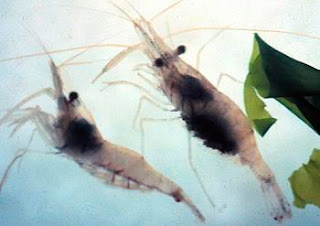
Shrimp are swimming, decapod crustaceans  classified in the infraorder Caridea, found widely around the world in both fresh and salt water. Adult shrimp are filter feeding benthic animals living close to the sea bottom. They can live in schools and can swim rapidly backwards.
Shrimp are an important food source for larger animals from fish to whales. They have a high resistance to toxins in polluted areas, and may contribute to high toxin levels in their predators. Together with prawns, shrimp are widely caught and farmed for human consumption.
Etymology: The term shrimp originated around the 14th century with the Middle English shrimpe, akin to the Middle Low German schrempen, and meaning to contract or wrinkle; and the Old Norse skorpna, meaning to shrivel up.
Life cycle of a shrimp
Shrimp mature and breed only in a marine habitat. The females lay 50,000 to 1 million eggs, which hatch after some 24 hours into tiny nauplii. These nauplii feed on yolk reserves within their body and then undergo a metamorphosis into zoeae.
This second larval stage feeds in the wild on algae and after a few days metamorphoses again into the third stage to become myses. At this stage the myses already begin to appear like tiny versions of fully-developed adults and feed on algae and zooplankton.
After another three to four days they metamorphose a final time into postlarvae: young shrimp having all the characteristics of adults. The whole process takes about 12 days from hatching. In the wild, the postlarvae then migrate into estuaries, which are rich in nutrients and low in salinity. There they grow and eventually migrate back into open waters when they mature.
Adult shrimp are benthic animals living primarily on the sea floor.
Shrimp as food
As with other seafood, shrimp is high in calcium, Iodine and protein but low in food energy. A shrimp-based meal is also a significant source of cholesterol, from 122 mg to 251 mg per 100 g of shrimp, depending on the method of preparation.
Shrimp consumption, however, is considered healthy for the circulatory system because the lack of significant levels of saturated fat in shrimp mean that the high cholesterol content in shrimp actually improves the ratio of LDL to HDL cholesterol and lowers triglycerides.
Shrimp and other shellfish are among the most common food allergens. They are not kosher and thus are forbidden in Jewish cuisine.via
Other picture of shrimp:

Shrimp as food: